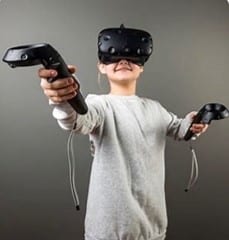
SONY has recently released the VR2, a headset which offers impressive technical performance and is lighter and reportedly a lot more comfortable than SONY’s previous attempt. You need a PlayStation 5 to use it and it costs a huge £529, but that seems to be a large part of the problem with virtual reality equipment… it is usually very expensive. The other problem is the lack of a wide range of games to really make the most of the technology.
VR games are available on every type of platform that children have access to, from gaming consoles to apps and PC’s but are they good for children?
The current agreement among VR manufacturers seems to be that virtual reality should not be used by children under the age of 13. This seems to be a cautious approach taken mainly because the technology is still new, so we don’t have evidence yet on the potential long-term effects on children’s health. The other reason is that the makers of the first mainstream headset (Oculus Rift) were a part of Facebook at the time and wanted the age limit to be the same as having an account on that platform. As with most new technology it does seem as though individual families need to make their decisions based on personal experience and beliefs around tech usage.
A study from Standford University demonstrated that half of all children that were exposed to a virtual reality experience, remembered the event as being real after more than a week had passed as their still developing brains find it harder to differentiate between the real and the virtual.
This means that young children would be a lot more susceptible to the content they experienced virtually than older age groups. However, is technology to blame or the way in which you use it?
If you think about the potential applications for virtual reality in children’s lives the possibilities are endless. Being inside a VR world is the closest we can get to an actually physical experience. It could help children roleplay situations they are nervous or worried about before they happen, think about safety in situations like crossing roads or stranger danger for example. Studies are also being done into how VR experiences can increase empathy and overcome various prejudices, and it would be easy to imagine VR schools providing the sense of connection with others that is often missing in online education.
Virtual Reality is far from mainstream yet, but it is clearly here to stay. How we choose to engage with it is completely up to us but is worth thinking about now.
What has your family’s experience with VR been so far?